The roads less taken

I don’t spend a lot of time traveling, nothing like I will in 2021. But when I do dart around the Midwest, my methods don’t deviate much from the average American. I travel mostly interstates, where available, preferring to get from Point A to Point B as quickly as possible. 

I’ve decided I’m going to change that up, at least when I’m on a solo run. Interstates are, by design, supremely boring, with little in the way of interesting view

On a recent trip home from the Cincinnati area, I opted instead to back-road it through Dearborn County (in this case, taking the path off-the-beaten path really didn’t add much time to my trip, given the unique nature of the I-275 loop around Cincy.

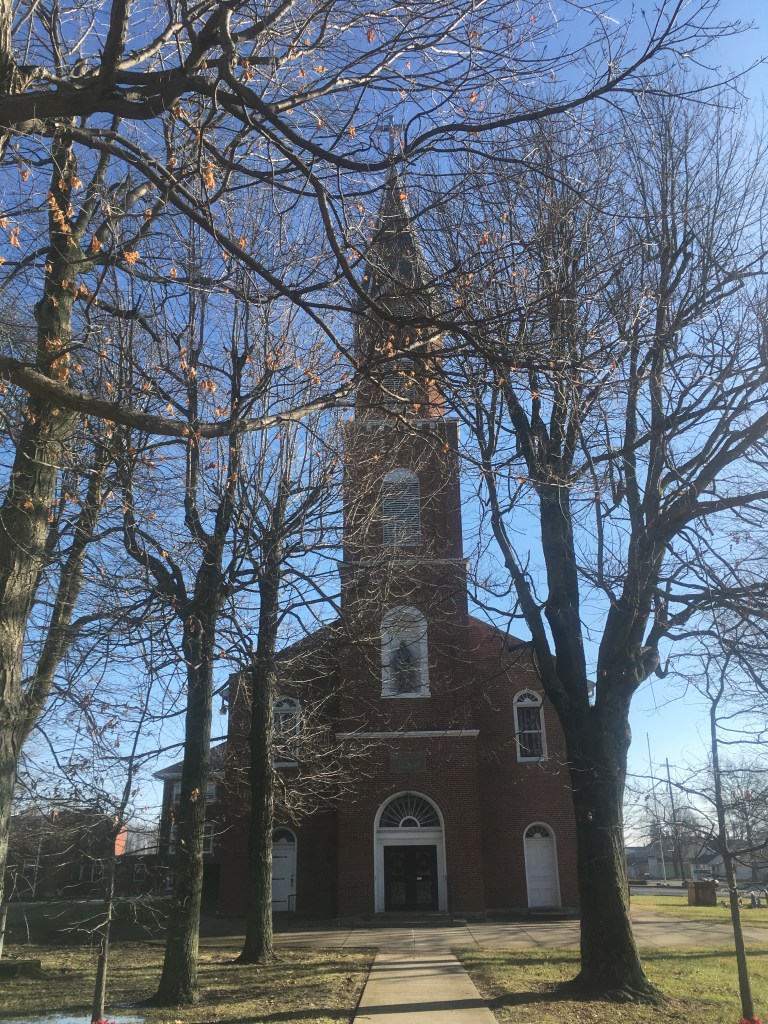
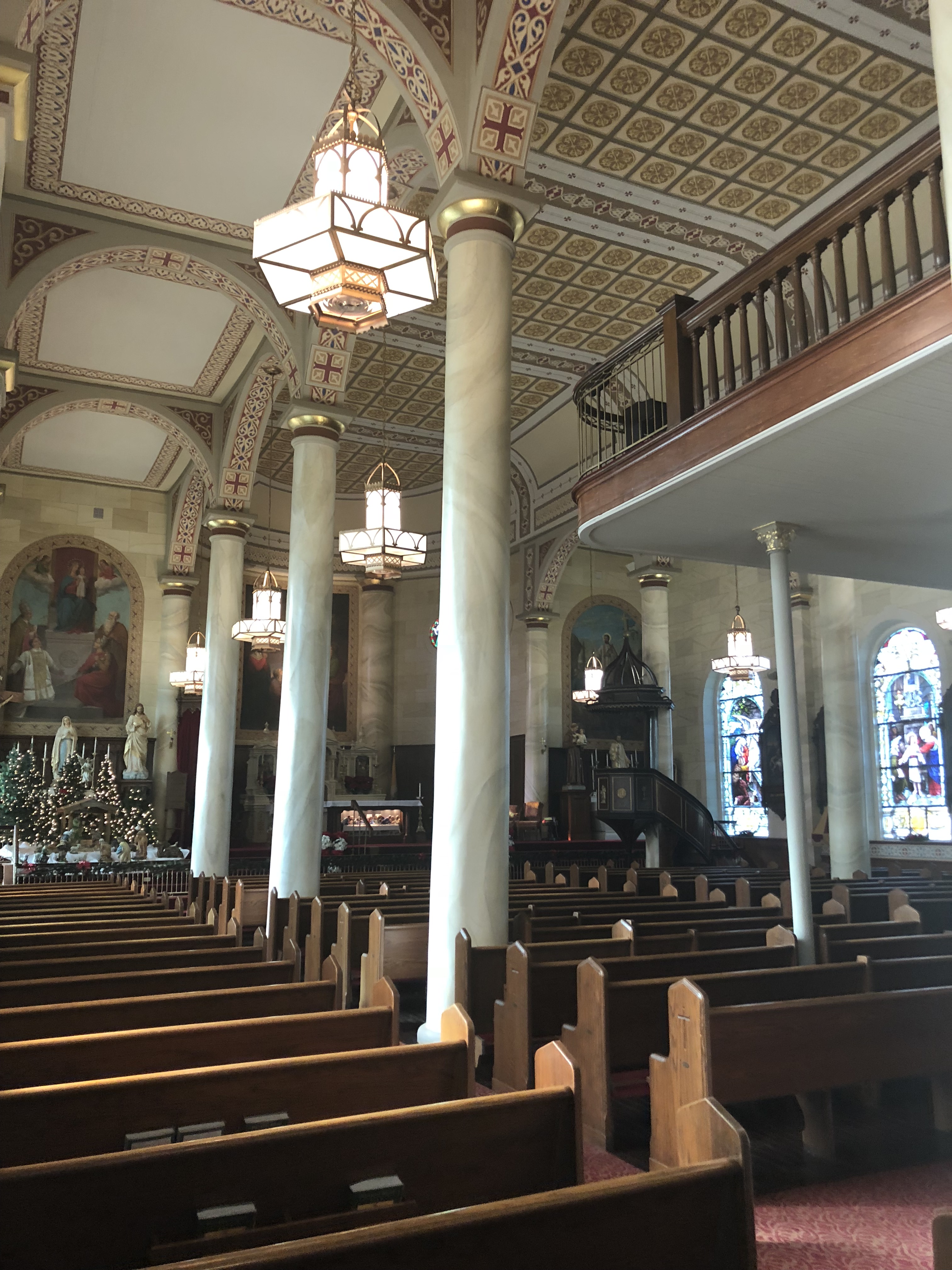
And a special opportunity awaited me on my journey. I stopped in the small town of New Alsace, a tiny community in northern Dearborn County I had never previously frequented, despite living not much more than a half-hour away for 13 years. And New Alsace was home to St. Paul, a pretty little church with a nifty place in history. Here are a few shots from the church…

As for the history, back in 1863, Civil War General John Hunt Morgan darted through this area on his famed raid of union territory, designed to divert troops and attention away from the fronts at Vicksburg and Gettysburg. Here, at St. Paul, Father Roman Weinzapfel was celebrating 8:30 a.m. Mass when Morgan’s men spirited away with his horses as the raiders pushed toward Ohio.

It was a nice opportunity to stop and learn something about this church I wouldn’t have known about had I not diverted myself from the main thoroughfare. More important, it was merely nice to stop, walk around the church and simply sit/kneel and pray. Like most, I tend to convince myself I’m in a hurry to get where I’m going, though most often I am not. Taking this break reminded me of the calm that comes from simply sitting in a church in prayerful thought and reflection. I intend to make this a regular part of my solo trips in the future, and I’ll share the photographic evidence of these churches of all types as I do.
Indiana’s First Parish

My oldest son, Ian, completed most of his undergraduate work at Johns Hopkins University with the conclusion of the first semester. But now that he’s on the employment trail, he’s returning to Baltimore to begin the hopefully short interview process before landing his first job.

Thus, the Christmas holiday provided one last opportunity for a father-son travel adventure, the kind we both enjoy (one heavy on seeing historical and other sights, rather than things to do).

We used this chance to make our first real visit* to Vincennes, Indiana, the Hoosier State’s first city. Our chief destination was George Rogers Clark National Historic Park, a nifty little place on the shore of the Wabash River.

We thoroughly enjoyed our too-brief stay, even with the government shutdown that kept the inside of the impressive memorial closed to visitors (if you have way too much time on your hands, you can see our thoughts on the shutdown here, as we were interviewed by a Terre Haute news channel that was reporting on the local effects of the “Closed. Be Back in Who Knows How Many Minutes” signs on all of our federal buildings).

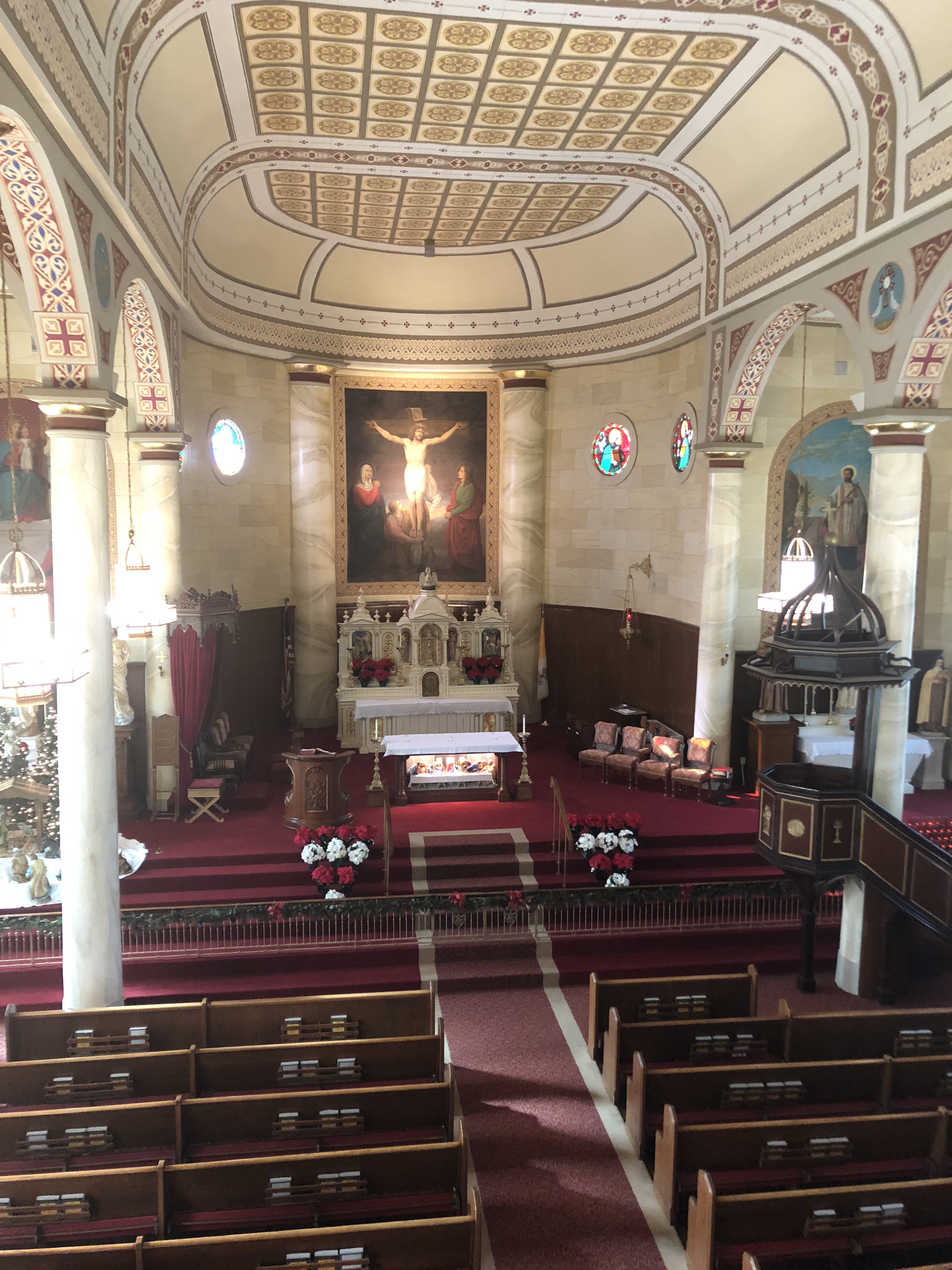
A delightful side benefit to the trip was the fact the Memorial sits side by side with the Basilica of St. Francis Xavier, Indiana’s first Catholic parish. Old Cathedral, as it’s also known, doesn’t necessarily wow you from the outside, but the interior was drop-dead gorgeous, which I hope is reflected in the photos Ian shot.

*I’d been to Vincennes twice 30 years prior to play in college soccer games, though the city’s charms didn’t register at the time. To be fair, I wasn’t looking.

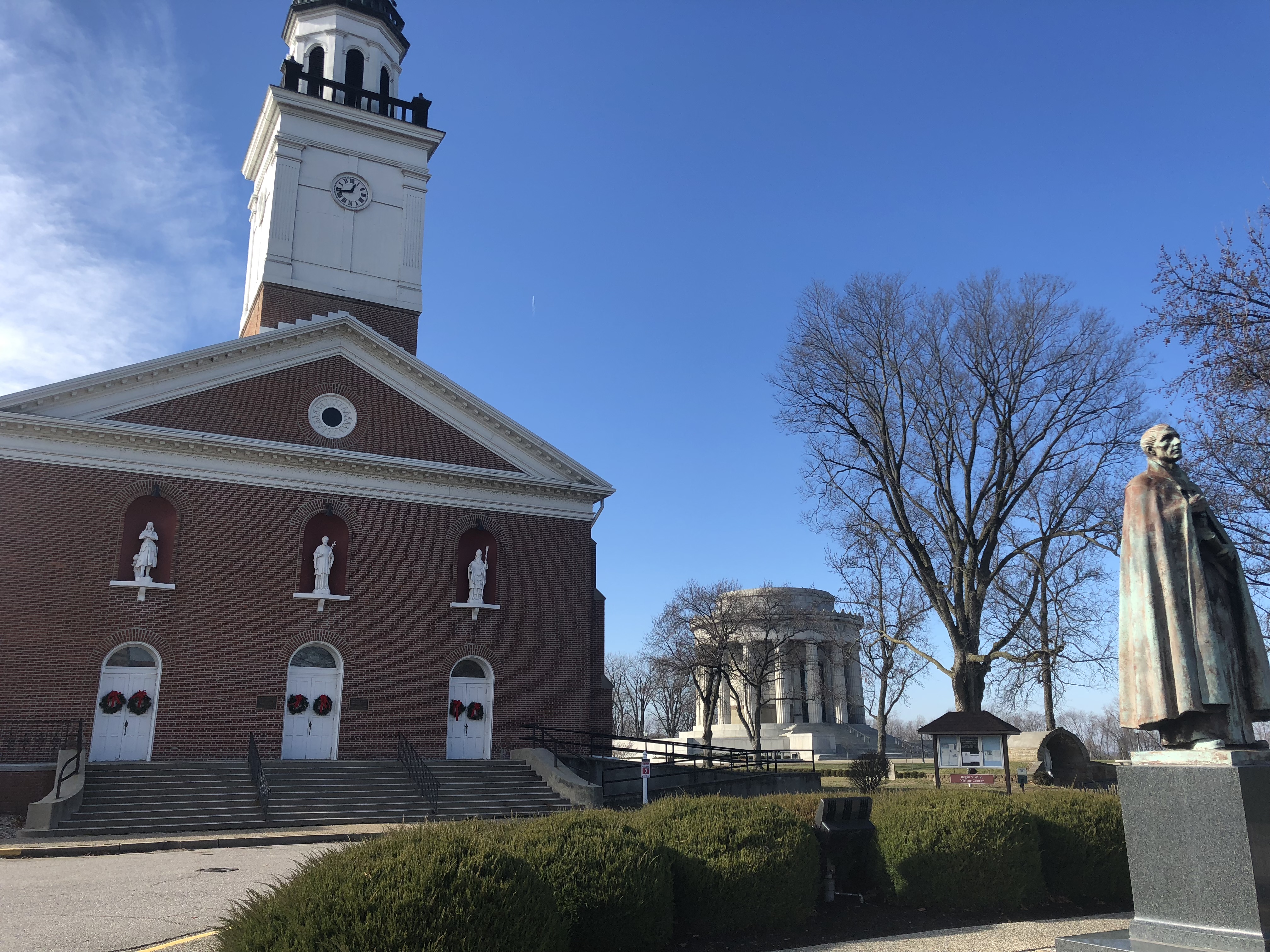
The Basilica of St. Francis Xavier in Vincennes, Ind. In the background is the George Rogers Clark National Historic Park. The granite memorial building is the highlight of the riverside location, a key site in the Revolutionary War as well as the location where Abe Lincoln left his boyhood home state of Indiana to enter Illinois for the first time.

Parish pushes to keep serving

As most of you already here know, I’ve spent the past few weeks reaching out to parish leaders across the country seeking possible churches to visit in 2021. And the responses I’ve gotten already have been truly inspirational.

Last week, just before Thanksgiving, I got a call from Lisa Landone, a member of the choir at Our Lady of Good Counsel Chapel in Bridgeport, Conn. Nothing too unusual there, until you discover that the choir was founded after the tiny chapel was slated for closure due to membership numbers that had dropped down to unsustainable levels.  

But the existing members were determined to keep the tiny chapel alive. So they put together a message for Bishop Frank Joseph Caggiano, who graciously allowed them the opportunity to make their case.   

That they did, speaking passionately about the parish and the future they saw for it, capped by the presentation of the video here. And it worked. Bishop Caggiano agreed to allow the parish time to increase membership numbers and collections. And while the parish fell just short of the target numbers by the designated date, its progress and passion again convinced the bishop to let the small, but growing, parish continue its push.

That passion was so evident in our 20-minute conversation it thoroughly brightened my day. And it again reminded me why I’m doing this, and provided a glimpse of how wonderfully enriching the experience is going to be.

Stay Up To Date

Since I’m still more than 2 years away from my trip, there isn’t as much to say now as there will be when I hit the road.

Nonetheless, I hope to keep this blog current with new links and messages, whether that’s some of the people I’m communicating with as I plow forward, links to worthwhile organizations (such as this one) or other items that fit in here (such as this review).

If you’d like to stay abreast of any new content that I post here, I encourage you to follow me. You can do so by clicking on the small follow icon that appears and disappears at the bottom of the page (at least that’s what it does for me).

For Your Shopping List

51E7IEf6fhL


Were I tempted to write about Thomas J. Scecina, the Catholic Priest who served as a POW in World War II, my good friend and Scecina High School graduate Chris Crabtree would have disabused me of that notion.

It’s not because Scecina is an unworthy subject for the words and sentences treatment. On the contrary. It’s only because Chris and Jeff Langholz have already delivered a portrait of Scecina so thorough that I wouldn’t dare try to follow.

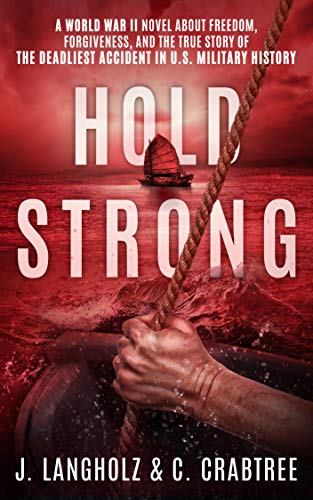
Scecina is one of the central characters in their new book, Hold Strong. It’s a historical novel based on the mostly unexplored story of U.S. soldiers taken as prisoners of war in the Pacific Theater. The novel captures the story after the soldiers had endured the Bataan Death March, during their time on the Arisan Maru, a Japanese hellship for American POWs. It’s a harrowing tale that takes no shortcuts.

Through exhaustive research into materials unclassified 30 years after the war, combined with interviews they conducted, Chris and Jeff deliver a plausible explanation for some of the events surrounding the ships’ fates. I’ll spare you the details to allow you to discover the story on your own. But the novel digs into, and prompts meaningful questions about, the decisions made in combat, both at the strategic and individual levels, all the while keeping you riveted by the remarkable events as they transpire.

And for Catholics, the book does a marvelous job exploring Scecina’s commitment, and how he inspires the men around him in the face of horrific conditions. Chris and Jeff manage to do in this historical novel what I want to do with my project – present a compelling picture of our faith at work.

Hold Strong is currently available on Amazon, linked here. A print version will follow.