The Church at its Best

This past Sunday took me to St. Leo the Great, a church in downtown Cincinnati that a ministry at my church often partners with. I was delighted by what awaited.

St. Leo is the epitome of part of what I was trying to capture on my journey, the living embodiment of the vitality and diversity of the universal church. The congregation is made up of Whites and Blacks, Asians, Africans and Central and South Americans. Father Jim delivered his homily in both English and Spanish, while the second reading and first Communion song were in Kirundi, a language spoken by the good people of Burundi.
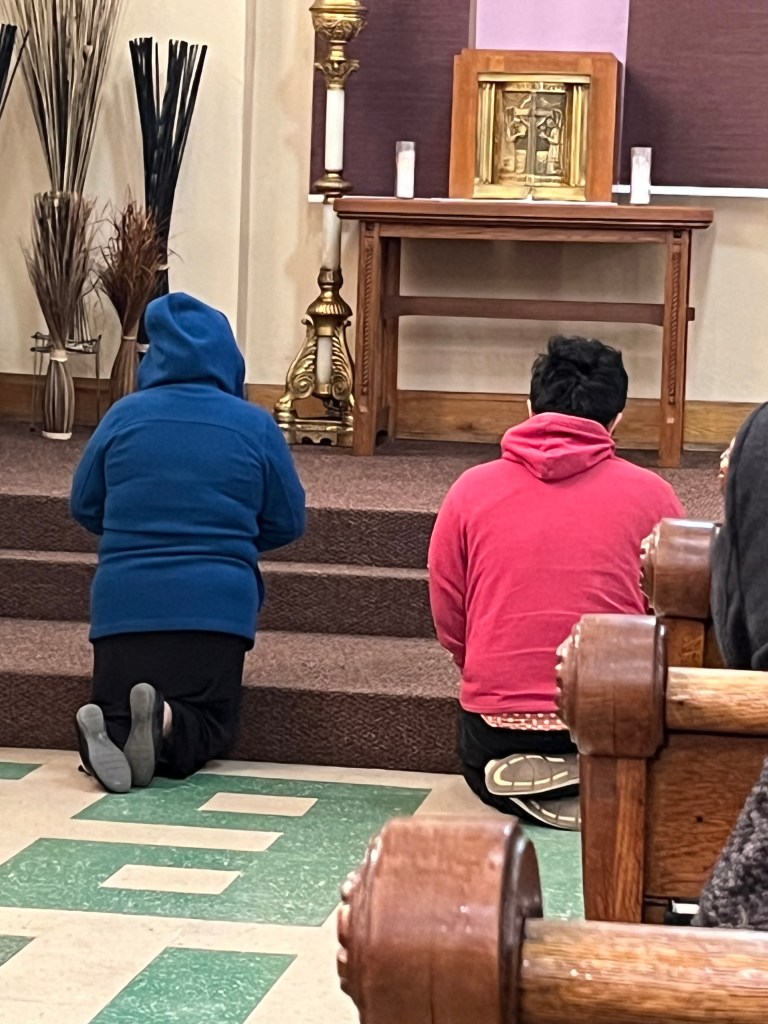
These were devout people, with many of them stopping to engage in silent adoration before Mass began.

But perhaps most notable, which I hope is obvious in this video, was how overflowing the parish was with families. There were young people everywhere you looked — two altar servers, a handful of greeters, ushers, and the person handling the video monitor were all well below voting age.

When Sister Thea Bowman spoke before the United States Conference of Catholic Bishops, the Catholic Reporter’s Tom Roberts described the experience by saying, “I said to myself then – and have said since to anyone who would listen to the story – that I thought I saw a glimpse of the Church’s best future that day.”

I felt a little bit of that last week.

More History in St. Augustine

St. Augustine, Florida, is the ancestral home of the Catholic Church in the 50 states and site of the Cathedral Basilica of St. Augustine, a beautiful worship space that draws visitors from all over the world.

About a half-mile away sits a much less grandiose church, but one also steeped in history. St. Benedict the Moor, now a sister parish with the cathedral, was the home church to the African American Catholic community in St. Augustine, a sad condition reflective of the horrible segregation and discrimination faced by Blacks that lasted well into the 20th century.

But St. Benedict the Moor and its parishioners played its role in reversing that history. In 1916, three Sisters of St. Joseph, Mary Beningus Cameron, Mary Thomasine Hehir, and Mary Scholastica Sullivan, teachers at St. Benedict School, were arrested for challenging a Florida law that prohibited Whites from teaching Black students. A judge released the sisters, claiming the law did not apply to private schools.

Almost 50 years later, the church hosted a visit by Dr. Martin Luther King Jr. during a lengthy visit to St. Augustine at the height of the civil rights movement. His fellow civil rights leader Ralph Abernathy stayed at the home of the Hughes family, St. Benedict the Moor parishioners. On my visit, I was blessed to meet and speak with Donna Hughes, still a parishioner at the church her ancestors helped build more than 100 years earlier.

Christmas at the Cathedral

Christmas Mass was a little special this year. Ah, who am I kidding, they’re all special.

But a family vacation to Savannah for the holiday meant Christmas Mass was spent at a new worship space. And for that, we went right to the top.

The family attended the 10 p.m. Mass at Cathedral Basilica of St. John the Baptist, the home church of the Diocese of Savannah. Bishop Steven D. Parkes presided over the Mass, the first time I’d ever experienced the liturgy celebrating the Nativity with a bishop.

The cathedral, like most of the buildings in the exquisite city of Savannah, was a beautiful space, and the liturgy matched the surroundings. As usual, the church was standing room only, and we were among the many lined up against the back wall. It didn’t matter. It was still was a wonderful way and place to ring in the birth of our Savior.

May all of you experience a joyous and blessed Christmas.

A Blessing in Savannah

Deborah Lynn Rushing sits before her family plot at Bonaventure Cemetery in Savannah. The ray of sunshine above her was just another sign of God’s blessing on our chance meeting.

For Christmas this year, our family decided to spend a few days in the Southeast, first in Savannah followed by a visit to Charleston. It’s a similar trip to the one we made when I was on my yearlong mission, when we spent Christmas in New Orleans.

Our first stop today was at Bonaventure Cemetery, which is not as ghoulish at it sounds. My wife and I always love walking through cemeteries and this one was well worth it. The canopy of trees all feature dried out Spanish moss dangling overhead, creating a gothic atmosphere so perfect for Savannah. And the sea air rapidly aged even the newest of tombstones, enhancing the effect.

But the highlight of my visit was completely unexpected. A teary-eyed woman approached and asked if I would be willing to take a photo of her in front of her family plot. I naturally agreed and walked with her over to the spot where the Adair family has been laid to rest.

She told me that her grandmother and grandfather were the only people who ever led her to God, an introduction she clearly still treasures. She also shared tales of ghost stories told to her as a young girl and other memories from long ago. I had a wonderful time listening to stories of her life growing up there in the city we were visiting for the first time.

Before she sat for the photo, I mentioned that I would only take the photo with her phone if she agreed to another one with mine. I knew this chance encounter with this wonderful woman of Christ was one I wanted to share with all of you as we ready to celebrate the birth of our Savior.

I shared a few hugs with my new friend, Deborah Lynn Rushing, then she relinquished me back to my family, the both of us better for this brief but memorable encounter.

Advent is ending. Christmas arrives Monday. Blessings to all.