
Pope Francis Prays for Us
A Year-Long Trip to Experience Catholicism Across America
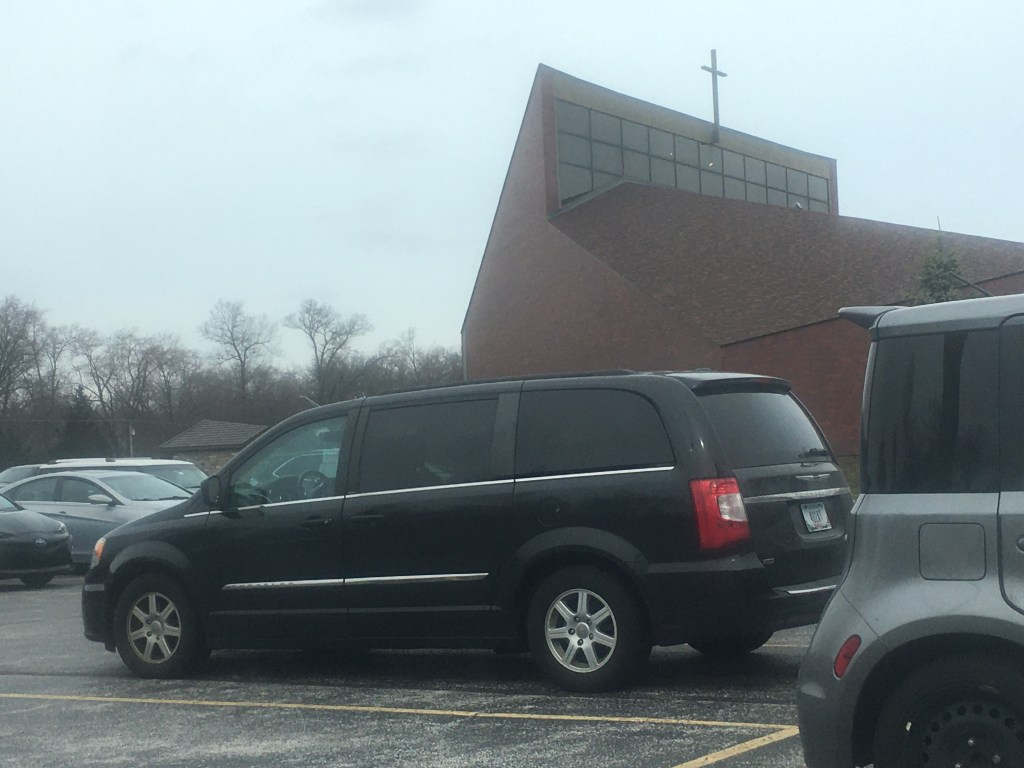
Sunday, we returned to our cars at Nativity of Our Savior.
When my home parish was founded in 1965, we had no church building. Instead, the Catholics in our rapidly growing city held weekly drive-in services at the Portage Mall (think the National Mall, rather than the Mall of America).
I was not around then, but many of our parishioners hold fond memories of those DIY days. So when the novel coronavirus wiped out in-person church services throughout Indiana this week, those long-time parishioners called for a return to our roots.
Which is what led to a hundred or so parishioners sitting in their cars at the church today, our radios tuned into an FM station to listen to Father Kevin lead Mass inside. Heritage Mass, we labeled it. Others stayed home, watching the Mass on the parish’s Facebook page.
These are most unusual times, certainly unlike anything I’ve ever experienced. With apologies to 9/11, my suspicion is the COVID-19 outbreak will become the defining communal experience of our lives.
As a Catholic, I’m hopeful our inability to worship publicly reminds of us its enduring value, and leads to a jolt of renewed attendance when we get on the backside of this pandemic. Likewise, I hope the fear and concern we’re all experiencing now serve as a catalyst to sincere prayer. The world desperately needs as much as it can get right now.
It’s funny what you don’t know because you never gave it any thought before. That described a lot of San Antonio, to me, before the past three days.
A work conference took me to San Antonio, the Texas city most known as the site of the Alamo. But the city’s connection to Catholicism dates not only dates back before its setting for the most famous losing battles on American soil, but includes that site as well.
Before serving as a fortress during the Texas Revolution, The Alamo was built as a Catholic mission, one of five in the downtown area. San Antonio was founded as a Spanish mission city, and was named after Saint Anthony of Padua. It seems pretty obvious in retrospect.
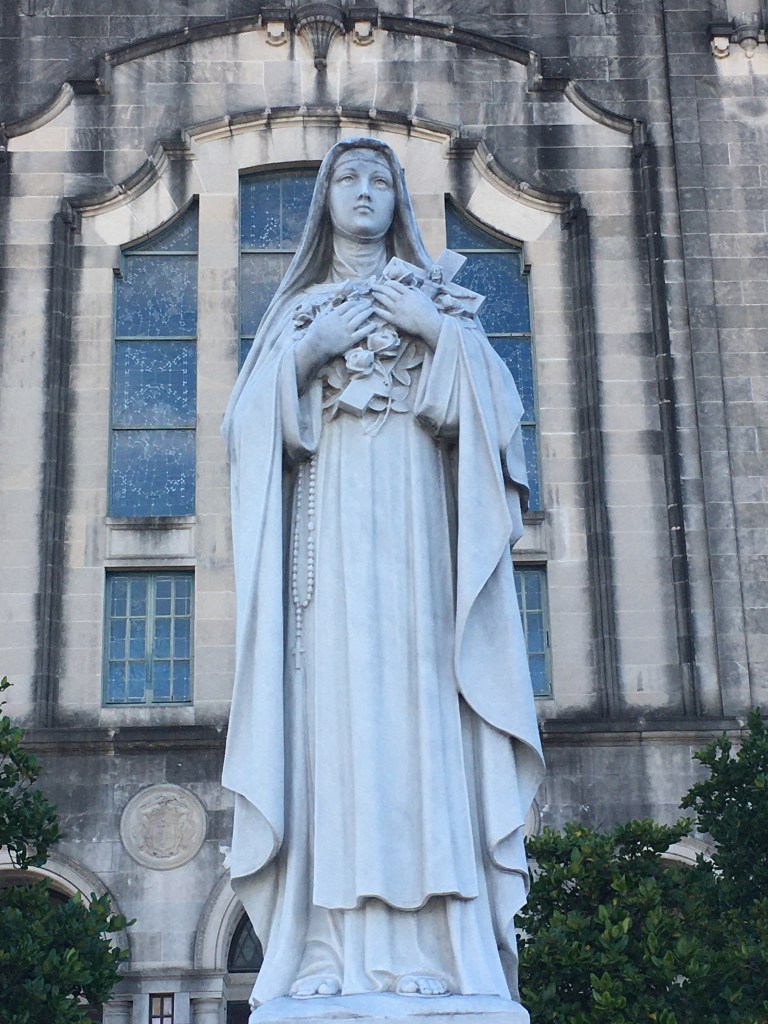
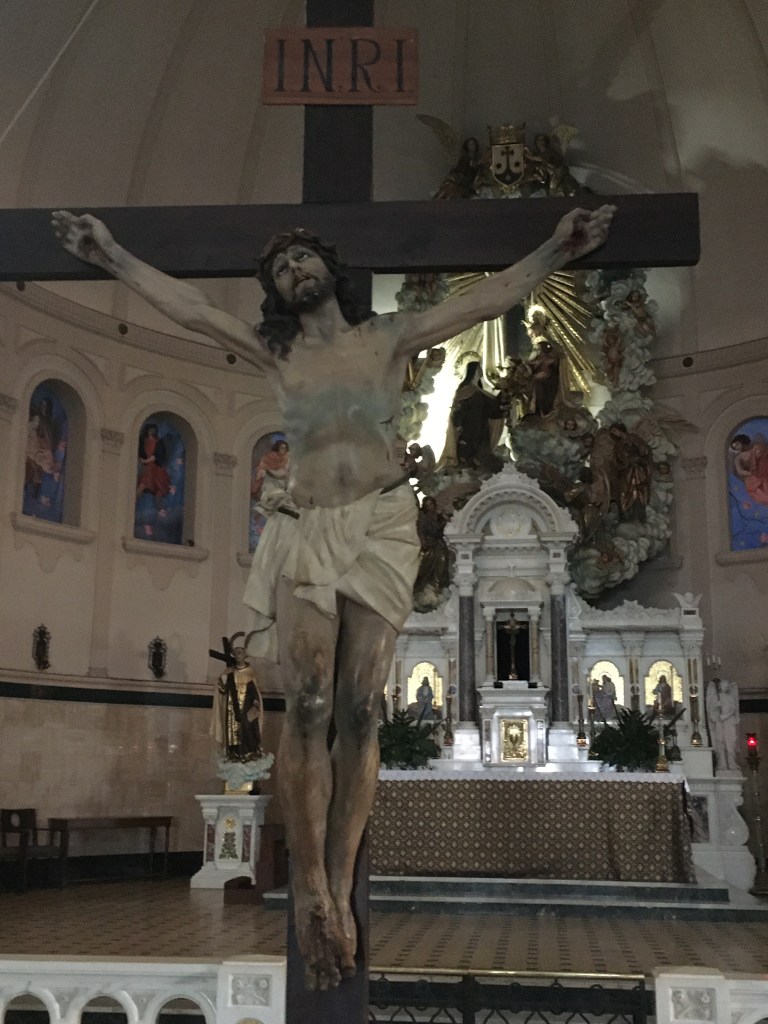
My non-work itinerary took me not just to the downtown area (where I stopped in at St. Joseph Church, built by a wave of German immigrants to the city), but also to the Basilica of the National Shrine of the Little Flower, a church west of the downtown area. By good fortune, the conference schedule allowed me to attend one of the nightly masses at the beautiful church.



Mass today brought us a visit by Father Robert McAleer, a retired priest from Iowa. He was there as part of his new mission, serving as a traveling priest extolling the virtues of Unbound.
Unbound is a Kansas City-based organization that allows Catholics to provide financial assistance directly to a child or adult living in poverty around the world. Children are eligible for participation as long as they remain in school. Each sponsor contributes to the health and welfare of an individual with a monthly contribution of $40.
Just as important, it’s not simply money sent off with no knowledge of how it’s being spent. Regular communication with the sponsored individual is available, with letters and photos sent between the parties, allowing the sponsor a personal connection to the individual being helped.
And as is worth noting with all charitable efforts, Unbound has a strong rating from the Better Business Bureau, Charity Navigator and other watchdog groups. More than 93 percent of all contributions go directly to the sponsored individual.
My support for this organization is not just digital. Our family has been sponsoring Erika since Unbound was known as the Christian Foundation for Children and Aging. We’ve seen her grow into a confident, bright young girl with a promising future. It’s extraordinarily gratifying to think we might have played a small part in that.
For more information, visit www.unbound.org.
A movie review from a guy who doesn’t go to the movies.
On Monday night, my colleagues from Nativity of Our Savior’s St. Vincent de Paul Conference eschewed our normal meeting (held the first and third Mondays at 6:30 p.m. in the Cana Room – new members are encouraged to join us) for a field trip. We were heading to the Portage movie theater, which is definitely not its real name.
We were there to watch a special showing of Love and Mercy: Faustina. The movie from Fathom Events tells the story of Saint Faustina Kowalska, the Polish-born nun whose visions of Jesus ultimately led to the creation of the Chaplet of the Divine Mercy.
The film is a blend of acting, with primarily Polish performers recreating the significant events in the history of Divine Mercy, interspersed with documentary-style interviews with Catholic theologians and historians in Poland, Lithuania and the U.S.
It was a fascinating tale, well told in my very amateur opinion. The reluctance from church figures to accept Sister Faustina’s visions and the Divine Mercy (leading to some humorous moments in the dramatic portion of the presentation) created tension, as did the natural backdrop of the rise of Nazi Germany and the Holocaust, World War II and the Cold War portions of the story were set against.
Sister Faustina, who died at age 33, was ultimately canonized, quite fittingly, by her countryman Pope John Paul II in 2000. He also designated the Sunday after Easter as the Feast of the Divine Mercy
It was also the pope, then the archbishop of Krakow, who began the process of reversing the Vatican’s opposition to the Divine Mercy devotion and the censure of Sister Faustina’s confessor, Father Michael Sopoćko.
Eight years after Sister Faustina became Saint Faustina, Father Sopoćko was canonized by Pope Benedict.
While my thumbs are ordinarily not particularly useful digits when it comes to cinematic expression, I’m still going to point them skyward here. I thoroughly enjoyed Love and Mercy: Faustina, and suspect you will, too.
 52 Masses