During my visit to St. Michael Parish in St. Michael, Minnesota this weekend, I was privileged to speak with Father Timothy Smith on Real Presence Radio, a Catholic radio network for the Upper Midwest.
The link to the interview is below. I want to express my sincerest thanks to Father Tim and the rest of the staff at Real Presence Radio for speaking to me about my mission.
https://yourcatholicradiostation.com/node/54869
Author: Daniel
St. Rose of Lima – Newtown, Connecticut
When I was choosing which stories to tell and parishes to visit, Connecticut was the very first place I locked in on. Early in my reaching-out phase, Monsignor Robert Weiss invited me to come to St. Rose of Lima to learn how the parish helped the largely Catholic community in its recovery from the horrific Sandy Hook shooting. I knew immediately that’s where I would be heading.
But the lead-up to my visit Sunday provided a mixture of both excitement and apprehension. Theirs is a story that needs to be told, an important lesson about the power faith and our Church can provide to aid the healing from unimaginable pain. Whether the support is for an individual dealing with hardship or an entire community reeling, as was the case here, houses of worship are uniquely equipped to handle this vital role.
Yet, as much as I think the rest of the country needs to hear this story, I wasn’t positive the same was true of the people who lived through it. I worried my appearance would be another painful reminder, or worse, that I’d be seen as some kind of opportunist. I wondered if downplaying my presence there wasn’t called for.
I need not have worried. Monsignor introduced me at the end of Mass, and the people I met afterwards were warm and gracious, and genuinely glad I chose St. Rose as my place to worship. It was a parish teeming with vitality and joy, and I consider myself immensely fortunate to have spent my Sunday in the presence of such an inviting community, guided by a truly inspiring man of God.
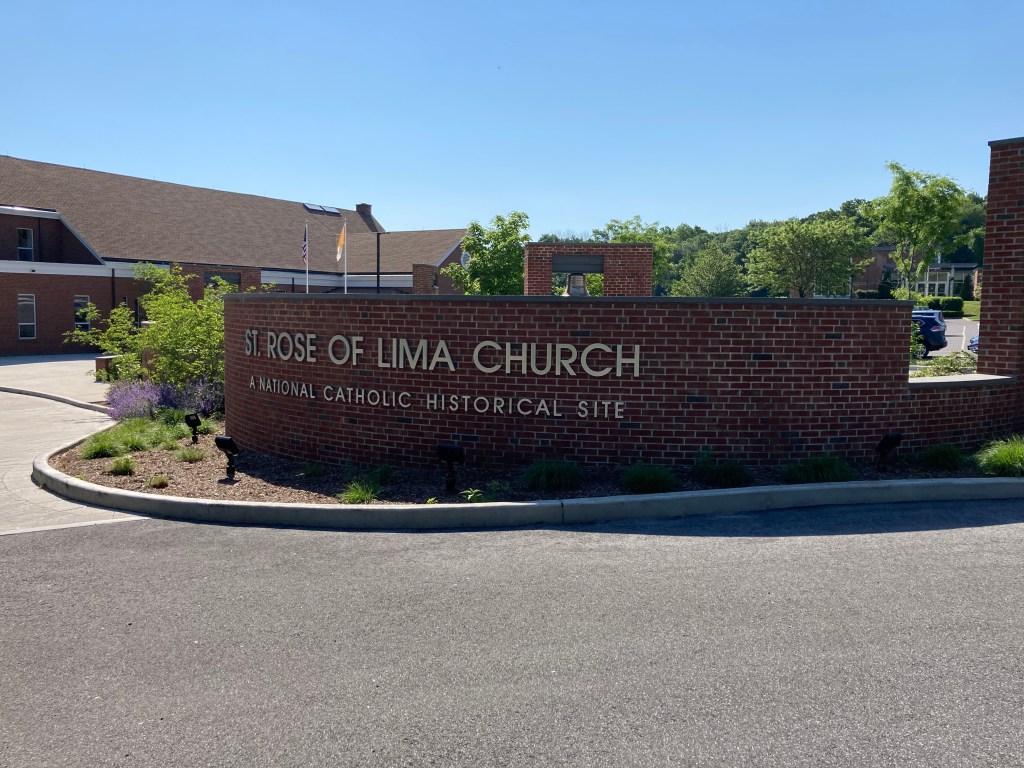

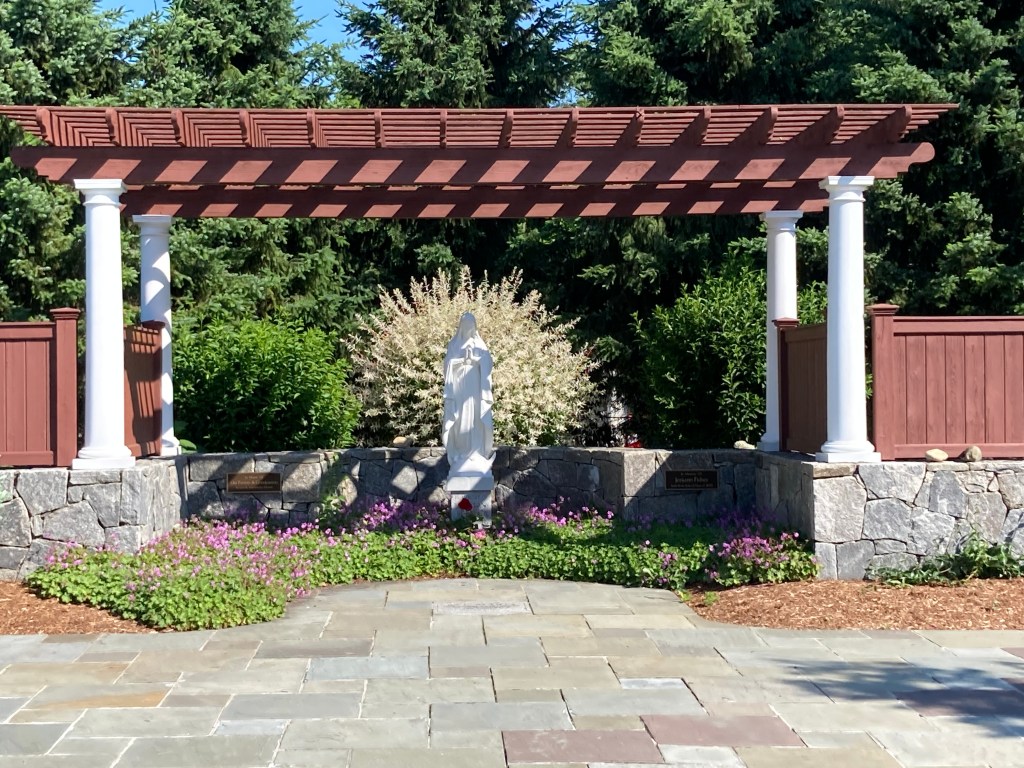
And We’re Off
On Saturday, I walked into St. Patrick in Nashua, the first real steps on the experience that has consumed me for the better part of the last five years. Almost immediately, I put myself to work.
Father Michael Kerper, pastor at the city’s oldest Catholic parish, was at the rear of the church, and he quickly recognized the out-of-place face who was dressed a little more formally than most of the regular Mass goers at the Saturday vigil. It was a hot day in Southern New Hampshire, and most of the parishioners were dressed for that rare occasion.
Following our brief introduction, I asked Father if I could give him a hand removing the ropes that had been used to cordon off those pews that were inoperable in a socially distanced world. They wouldn’t be needed any longer, as the Diocese of Manchester joined so many other in lifting the restrictions that had been governing our faith lives for the last 14 months.
I like to think this act was symbolic, that I was launching my journey just as Catholic Churches around the country began opening their doors and their pews to the full celebration of Mass. I also prefer to think it was not at all emblematic when I got inadvertently locked out of the building following the conclusion of Mass.
I guess time will tell. Here are some photos from my visit.
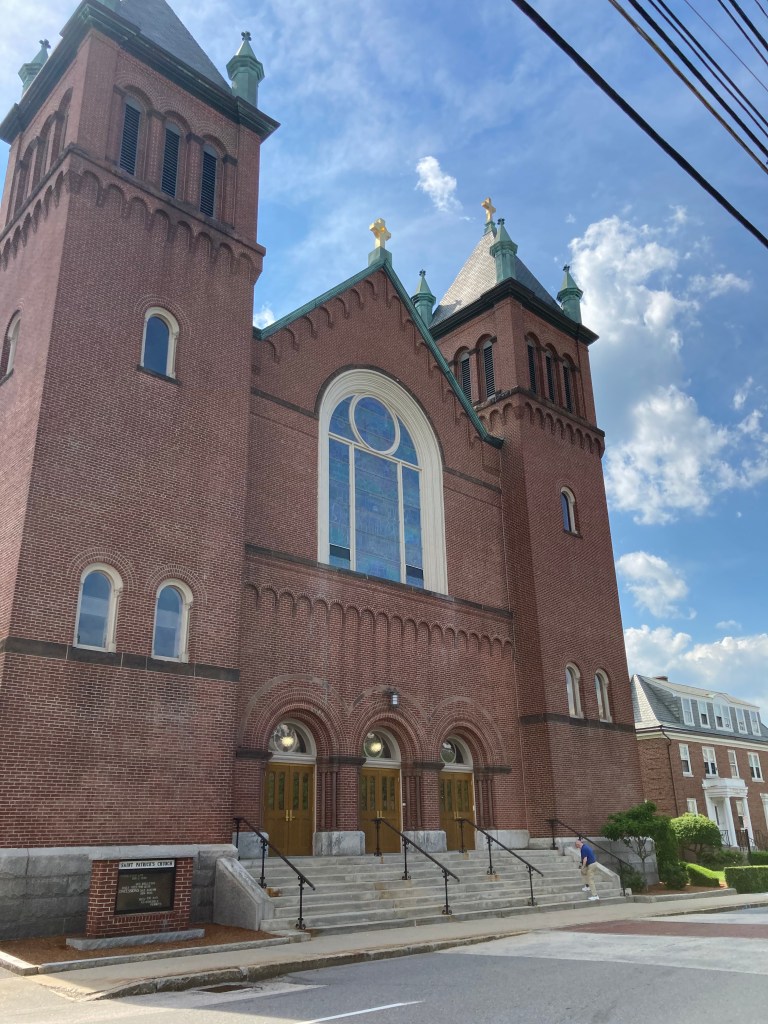
St. Patrick sits across from the courthouse in downtown Nashua, which is no longer the heavily populated section of the city.
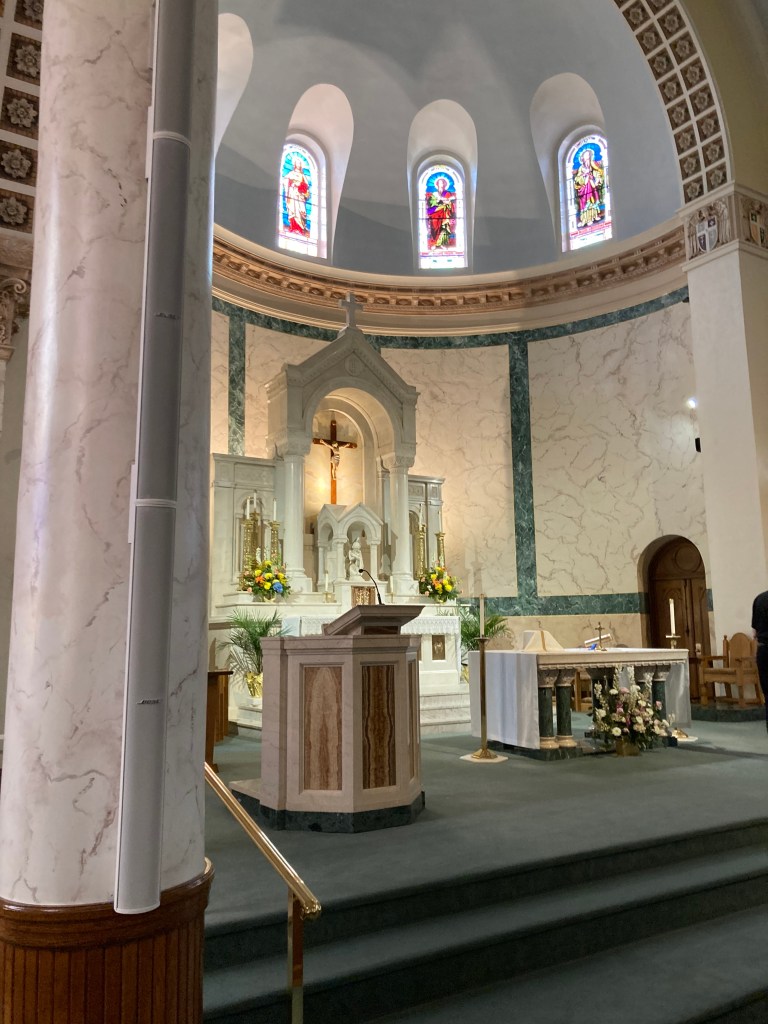
The downtown church is a gorgeous and well-preserved place of worship.
Vaccines Work, in More Ways than One
On Sunday, while my wife stayed home still feeling punchy from her first dose of the coronavirus vaccine, I did a solo trip to St. Gerald in Oak Lawn for Mass. Nothing unusual about that, we’ve become regulars at the 9:15 a.m. liturgy since we moved across the state line at the end of July last year.
I certainly wasn’t expecting anything out of the ordinary on the third Sunday of Lent. Yet, I was pleasantly surprised by what I discovered – the pews nearly packed, or at least as packed as COVID-19 rules will allow.
Since I started returning to in-person Mass last summer at my previous parish, attendance everywhere I’ve gone has consistently fallen well short of even the limited capacity. Good seats were always available.
Not this past Sunday. A rough estimate suggests about 50 percent more people were in attendance than the previous week. I hadn’t seen that many people in church since the pandemic began, including this past year’s Christmas Mass, which brings out the otherwise occupied.
What could account for the difference? Sure, the weather was nicer than it had been through most of February, but not any better than it was the prior Sunday. The only explanation that really made sense to me was the fact COVID cases were going down and, more important, inoculations were going up. I reckon people are finally feeling a little more comfortable going to Mass, more certain they will either avoid catching the coronavirus or unwittingly spreading it.
I dearly hope this trend continues. I imagine there are many in the faith who have worried this yearlong removal from regular Mass attendance could become permanent, as people fell out of the habit of the weekly commitment. I hope the opposite is true, that being deprived of the Eucharist for so long has reminded Catholics of the joy that comes from attending weekly Mass.
Sunday’s service, even with masks and other social-distancing protocols still in effect, gives me hope it’s the latter.
Deer Me
This post is quite far removed from my ordinary efforts here, but I’m kind of starved for content given the ongoing coronavirus crisis. Couple the pandemic with the protests, some of which have turned violent, over the tragic, unnecessary death of George Floyd, and finding cause for optimism at the moment has been difficult.
Under those circumstances, I thought it fitting to link to this little bit experience I shared with my my wife this past Saturday, a reminder that if nothing else, we can still marvel at the beauty and wonder of God’s creation.
This past Saturday was a spectacular weather day, mostly clear and warm with an intermittent breeze that provided well-timed relief when the sun’s heat got too feisty. Kem and I used the conditions to venture outside, heading south to Charlestown, Indiana, and our first visit to the state park located there. Heck, our first visit anywhere in quite some time.
Charlestown State Park is a nifty place with a rather interesting history. The main site is the location of the former Indiana Army Ammunition Plant. Our ultimate destination in the park was Rose Island, once an amusement park and a popular getaway for Louisvillians a century ago.
A path steeper than Mandarin’s learning curve takes you to the Portersville Bridge, a camelback truss that once connected Daviess and Dubois counties in southwestern Indiana that has since been relocated to the other side of the state. The bridge crosses the Motown-flavored Fourteen Mile Creek to Rose Island, which is actually a peninsula named Devil’s Backbone. (All of these glorious monikers are just more reminders at how much we’ve devolved when it comes to naming stuff. Today, I’m sure, it would be branded Papa John’s Island on Fifth Third Peninsula).
There isn’t much left of the old park, which was hammered by the Great Depression then wiped out by the Great Flood of 1937, the latter an event that took the Ohio River a staggering 57 feet above flood stage. A few concrete piers, some cool arches and the filled-in former swimming pool are about all that remains of the park. The hotel and dance hall are but a memory, with most of the site reclaimed by nature, as nature is so relentless in doing.
Speaking of nature…
While walking on the trail that takes visitors near the adjacent Ohio River, we happened upon a fawn, a young deer that couldn’t have been more than a few days old. We froze, then watched in awe as it got back up on its spindly legs, Pinocchio-style, and walked straight toward us, not the least bit afraid of the strange, slack-jawed creatures towering above.
Eventually, the fawn stopped right at our feet. We then realized a group of hikers behind us had a large dog in tow, and we worried how the dog might respond to this terribly frail creature, particularly if the canine noticed the young deer before its human companions. We stood between the hikers and the fawn – which Kem retroactively named Fran – to caution them and another dog-walking pack behind them. Regrettably, we might have even breached our social distancing protocols in the process. Fortunately, both of the dogs were quite well behaved, and their Homo sapien friends were almost as disciplined.
As the lot of us kicked around thoughts on what should be done, Kem and I decided to continue along the trail, hoping the young deer would venture back into the woods. That wasn’t Fran’s plan. Much to our surprise, the fawn followed us, and not for just a few feet. For almost 200 yards, Fran bopped along behind us, never letting us get too far ahead despite the obvious fact it was still breaking in the new hooves. This was like nothing I’d ever experienced before, and doubt I ever will again. It was not an example of nature in the reclamation process; rather it was wildlife getting its hooks in us from the get-go, with me and Kem powerless against it. We stopped again, flummoxed how to handle the situation. Ultimately, one of the groups behind us decided to move the fawn off the trail, where we hope it was able to reunite with the doe that was undoubtedly nearby, watching us with a mother’s scornful eye.
She wouldn’t have been the only one baring her motherly instincts. I’m sure Kem will someday forgive me for not letting her take Fran home with us, but it will be awhile.
Alas, as my web site host doesn’t allow me to post video, you can see proof of the event on my Facebook page below. It’s most definitely worth the effort.
https://www.facebook.com/dan.markham.37/posts/10207724500988196?notif_id=1591368749025277¬if_t=feedback_reaction_generic
 52 Masses