Costa Rica, Part 3

We’ve saved the most spectacular for last, but we’re going to split our photo evidence over two days.

One of the first things we did when planning our Costa Rican vacation was to book a visit to the Basílica de Nuestra Señora de Los Ángeles in Cartago.

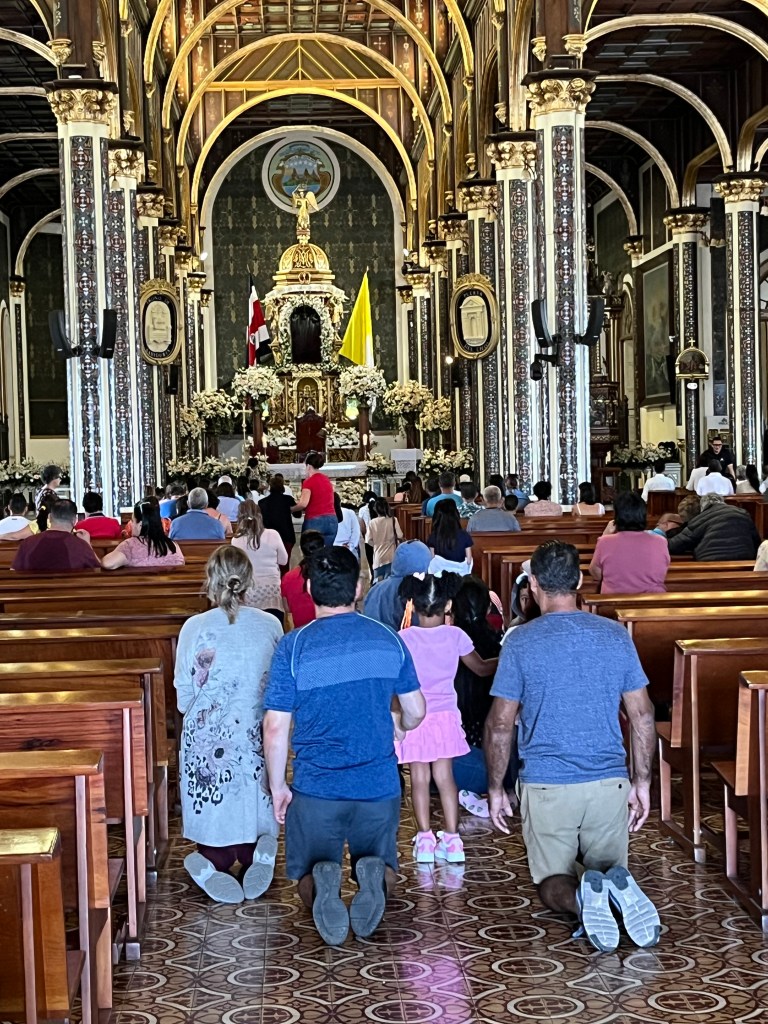
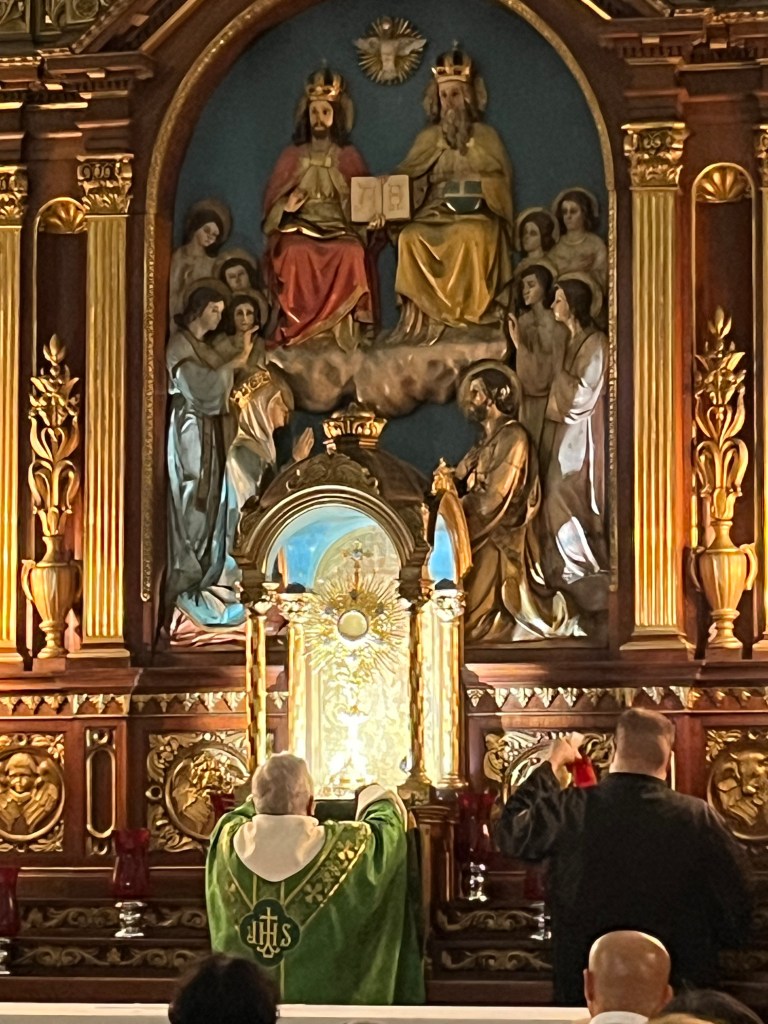
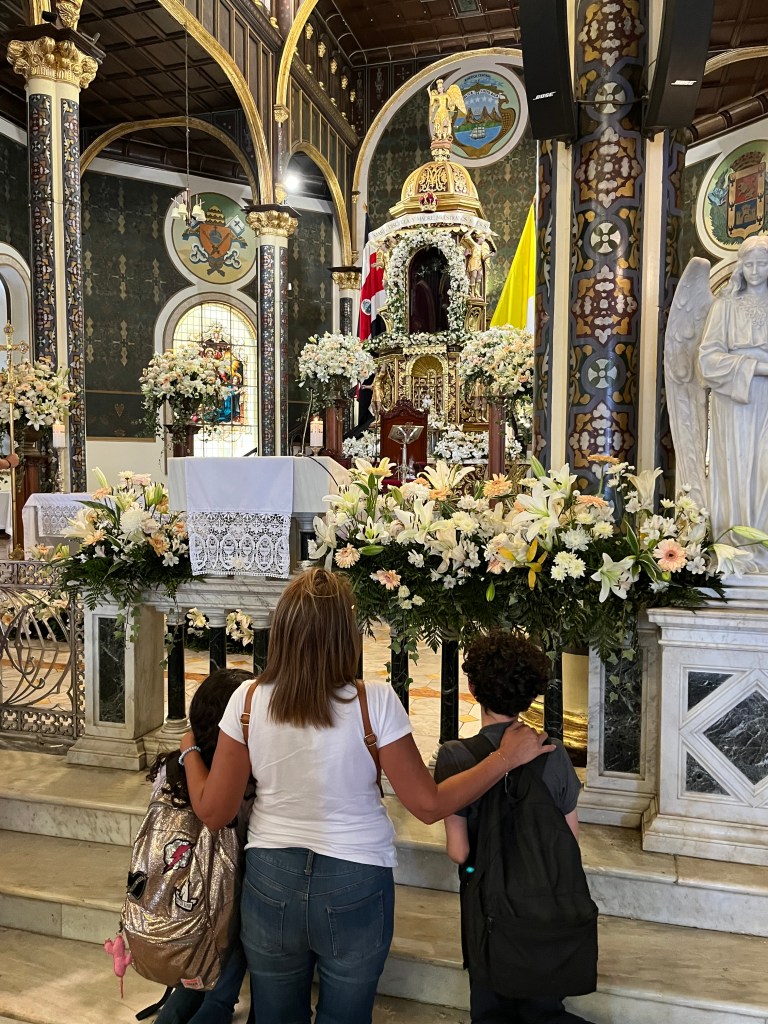
The church, originally constructed in 1639, is consecrated to the Virgin of the Angels after a young girl came a statue of the Virgin Mary carrying the infant Jesus on a rock in the woods. She took the statue home, only to find the next day it had returned to the same rock. After it happened again, she took it to a local priest, who determined Christ wanted a church built at the site. The statue itself, known as La Negrita, is kept in a golden shell inside the basilica and Costa Ricans and others throughout Central America continue to visit this Holy Ground to pay their respects and ask the Virgin Mary for her prayers.

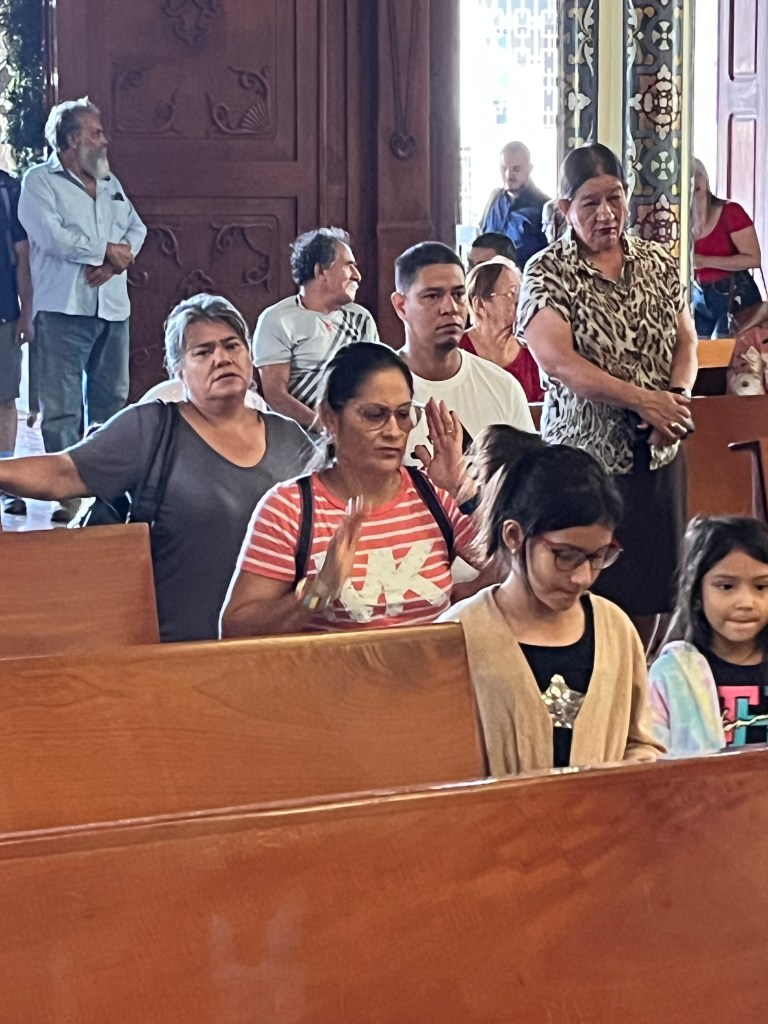
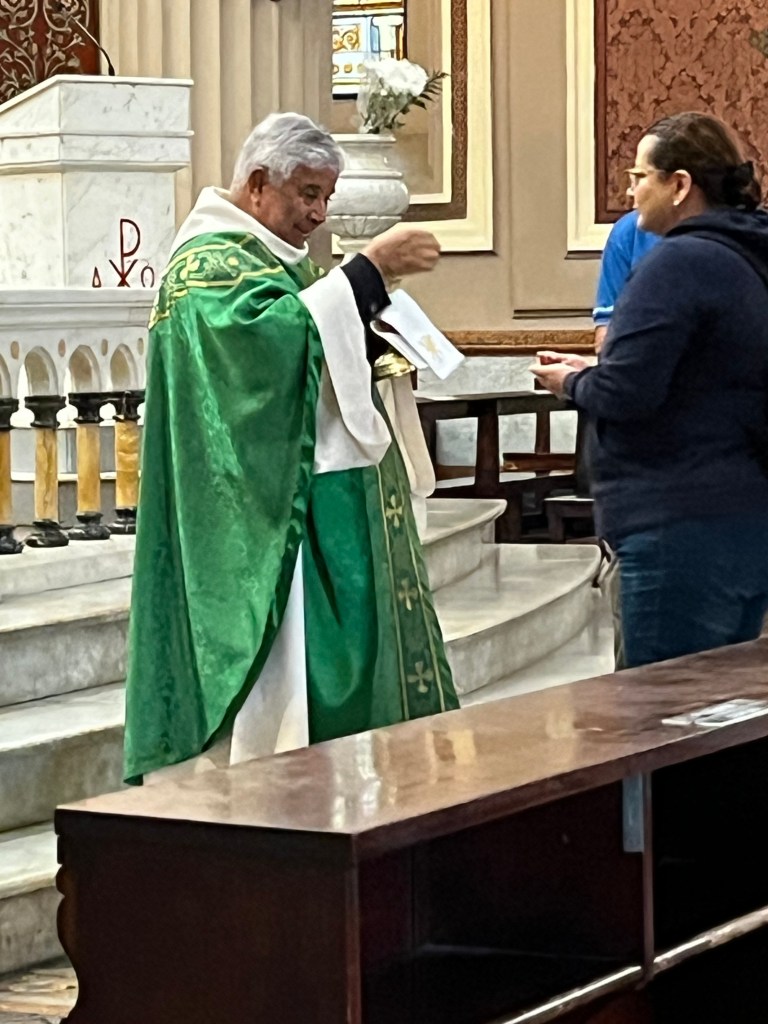
We were there Aug. 5, three days after the countrywide pilgrimage, known as the Romeria, to the basilica. More than a million people annually will walk from different points of the country to the basilica, many crawling for large parts of the pilgrimage. And though the formal Romeria had just passed, we witnessed numerous people crawling from outside the basilica up to the altar rail, a sign of their incredible devotion. It was truly moving, and unquestionably the highlight of the trip.
Costa Rica, Part 2

While my first and last stops will draw the most oohs and ahhs, the vast majority of Costa Rica’s Catholics don’t worship in these incredible locations. Rather, they’re experiencing the Mass in the small parish churches in their neighborhoods.

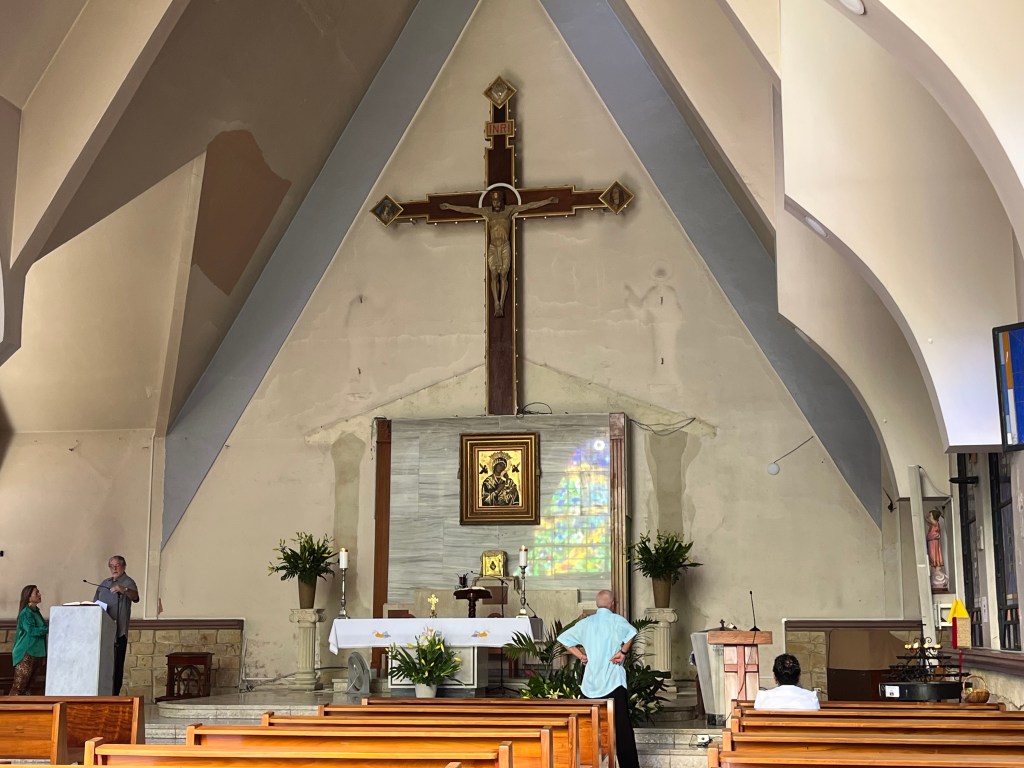
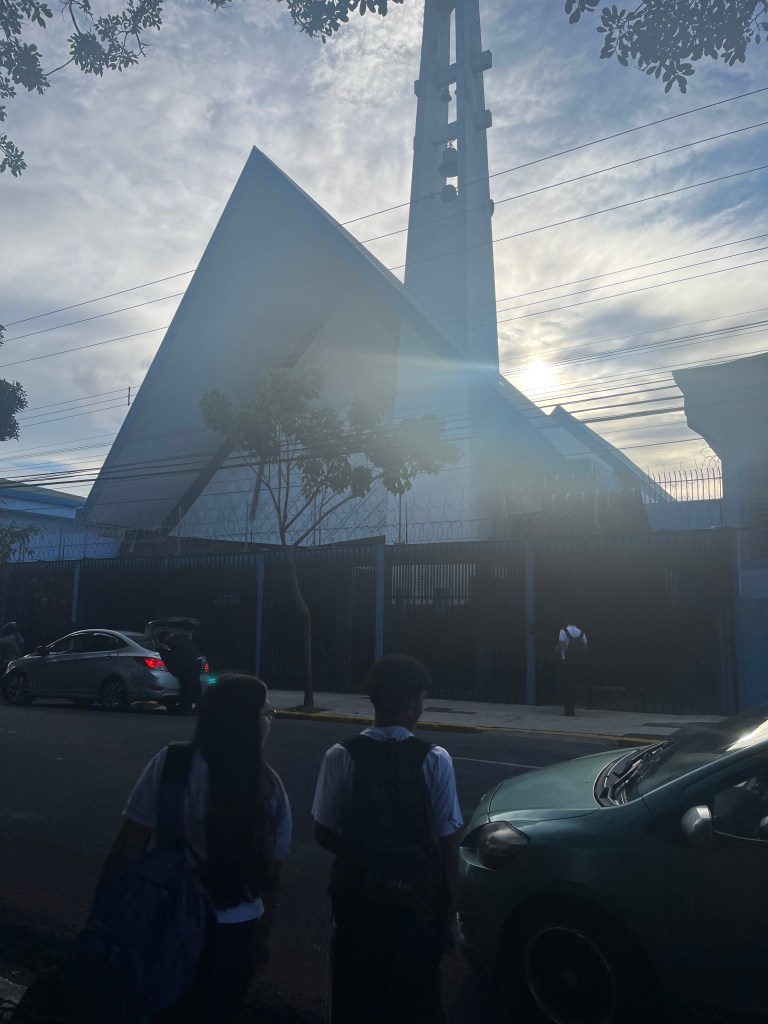
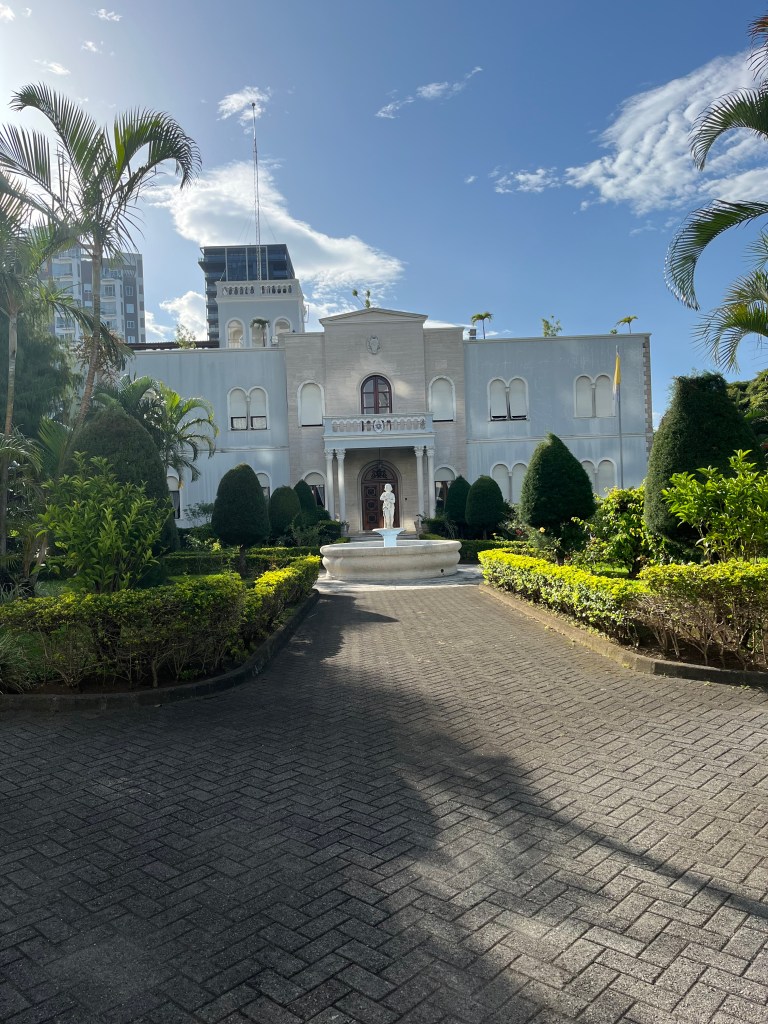
I wandered around the area near our hotel, located near Parque La Sabana, visiting a few of those smaller parishes. They included Iglesia de Maria Auxiladora, where children were flooding into the school building, Iglesia de San Juan Bosco, and Church of Our Lady of Perpetual Help. The neighborhood also featured the Nunciatura Apostolico, home to the Vatican’s diplomatic mission in the country.

As with all Central American countries, Costa Rica is overwhelmingly Catholic, with as many as 70 percent of the population born into the faith. But Costa Rica goes one step further, as it’s the only country in the region where Catholicism is adopted as the state religion.

In the park across from our hotel.

San Juan Bosco

Church of Our Lady of Perpetual Help.

School kids entering Iglesia de Maria Auxiladora.

Nunciatura Apostolico.

Costa Rica, Part1

My wife and I spent the past few days in Costa Rica. We were there to visit our oldest son, Ian. For those who don’t know, Ian is working as a refugee resettlement officer for the U.S. Department of Homeland Security, traveling to various parts of the world to speak with those men and women seeking refuge in the United States due to persecution, violence or other threats in their home countries. It’s incredibly important, Christ-like work, and I couldn’t be prouder of his commitment to this effort.

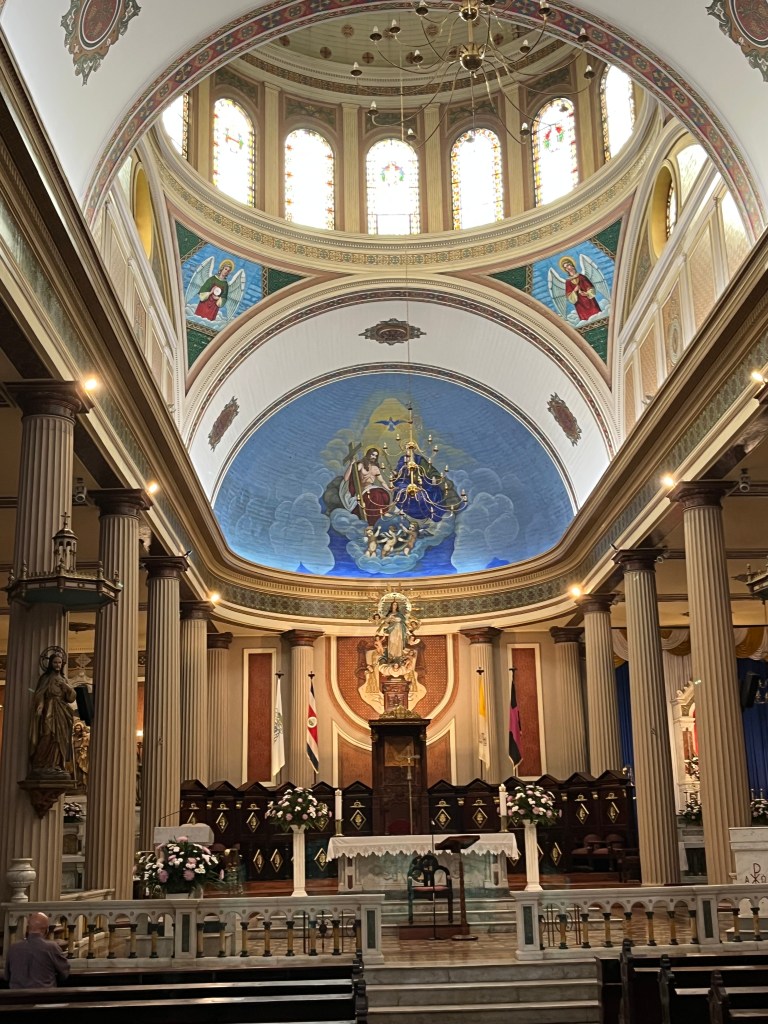
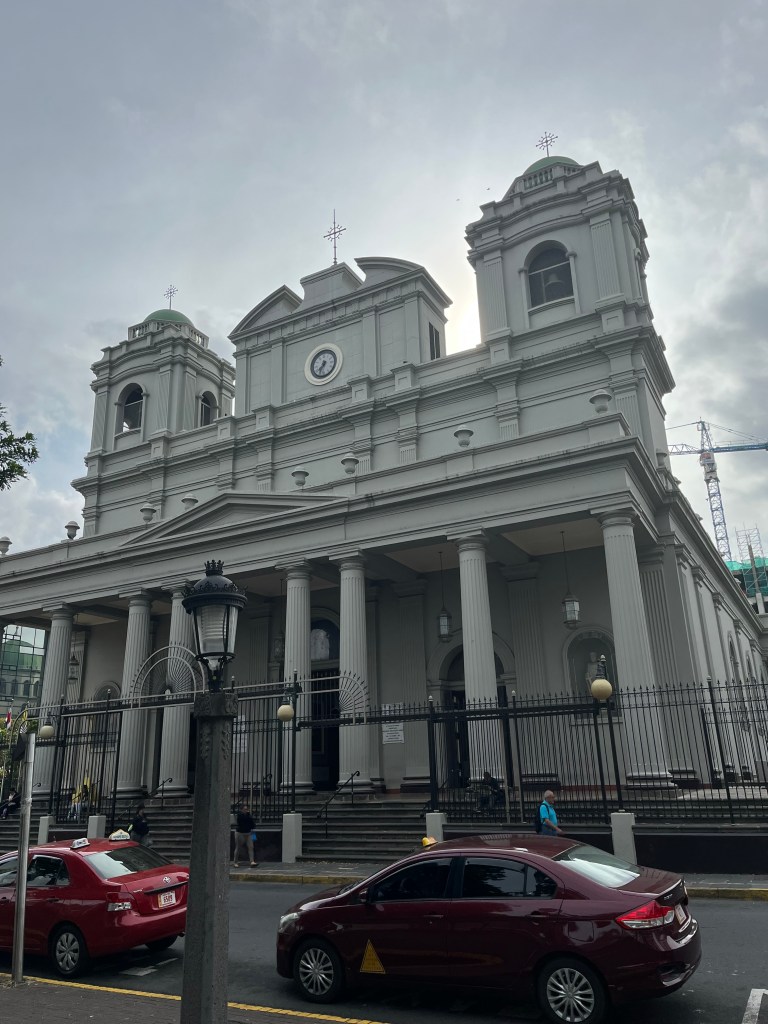
While we naturally took time to experience Costa Rica’s natural beauty (more on that later in the week), we also used the time to explore the country’s rich Catholic heritage. We’ll start that visit at the head of the Church in the country itself, at the Catedral Metropolitana San Jose. It’s the home of the Archdiocese of San Jose, the ecclesial province over the six other diocese in the country.

As you can see, it’s a beautiful building, fitting for a church in this heavily Catholic country. And yet, it’s not nearly as impressive as the country’s most spectacular place of worship (more also on that later this week).

52 Masses On Tape (well, sort of)

An update to a previous post.

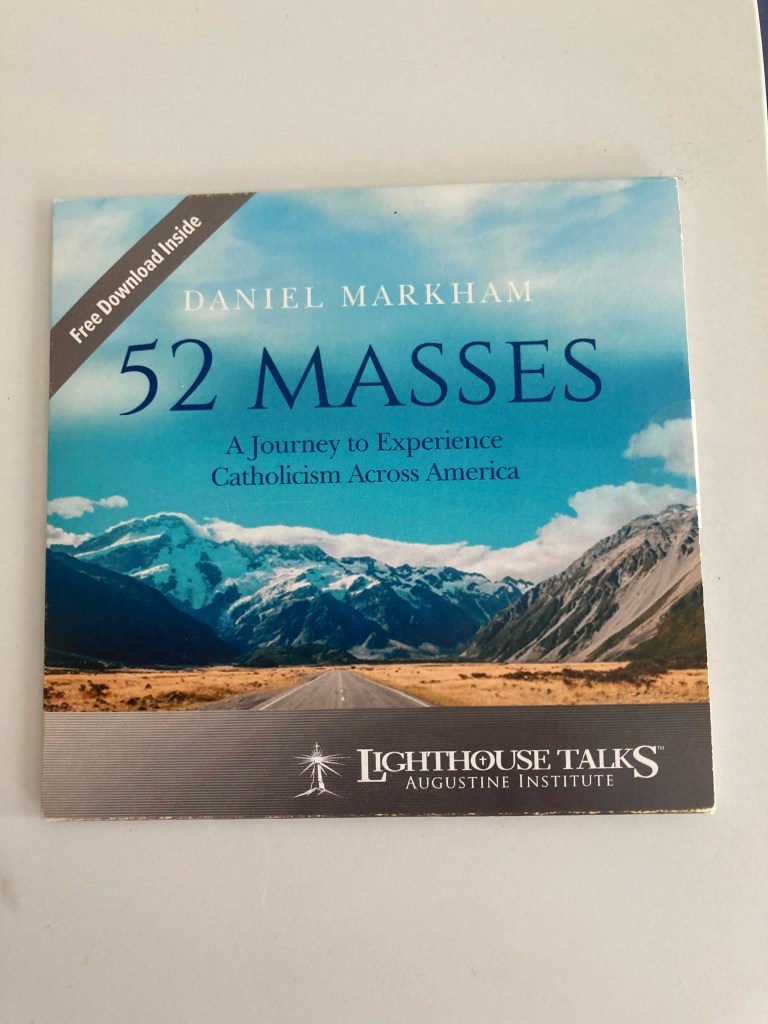
I just got the CDs in the mail from my talk for the Augustine Institute. Perhaps not quite the same thrill as holding my book for the first time, but pretty exciting nonetheless.

For the unaware, this CD is a 45-minute talk about my experiences on the road and the effect it had on me and my faith life.

You can get a copy (as well as other great Catholic content) for the low price of $3.50 from the Catholic Market here: https://catholic.market/audio/?sort=newest

And, as a reminder for those who are interested in getting a copy of the book, you can purchase copies at https://52masses.square.site.

Thanks for your interest.

The Jesuits Beat Me To It

I spent last week with the family exploring, for the first time, the beguiling Mackinac Island between Michigan’s Upper and Lower peninsulas. But where others were there for the shopping, the bicycling, the fudge, or the horse-drawn carriages, my first inclination was to explore the island’s Catholic roots.

I was not disappointed.

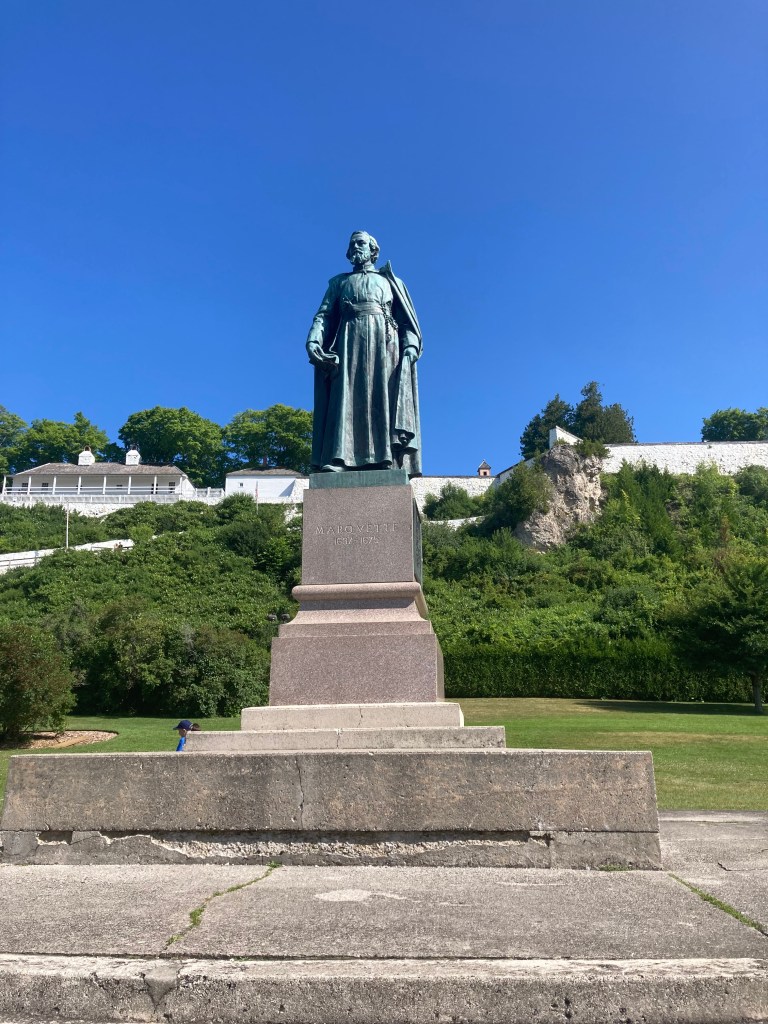
Mackinac, like so many other outposts west of the east, was initially explored by the Jesuits and their Native friends. Specifically, Father Jacques Marquette and Louis Joliet and the Huron Tribe. In fact, Father Marquette’s outsized role in the island’s history is preserved in bronze, just below Fort Mackinac.

A few feet away sits a replica of the Missionary Bark Chapel, where Father Claude Dablon and a member of the Huron tribe met as part of an expedition to determine whether it was suitable for inhabiting and raising crops (the answer was “yes” to the former, “not so much” to the latter).

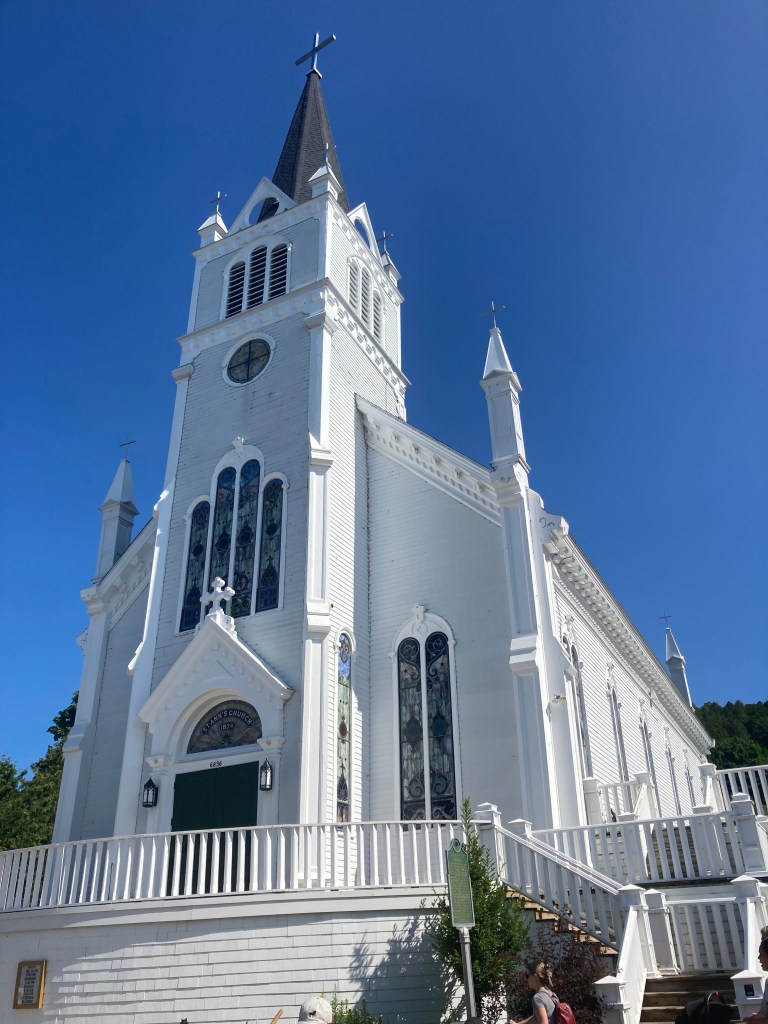
Finally, my wife and I ambled down the main thoroughfare to the beautiful St. Anne, which preserves the faith’s 300-year-old connection to the island. Sadly, though, we just missed Mass.

When it was over, we boated back to our launching point at St. Ignace, the town’s name serving as first sign of the area’s strong connections to the Society of Jesus.

Father Marquette.

The Missionary Baptist Chapel. Inside is a replica of a meeting between Father Marquette and a member of the Huron Tribe.

St. Anne, which has a 300-year-old connection to the area.

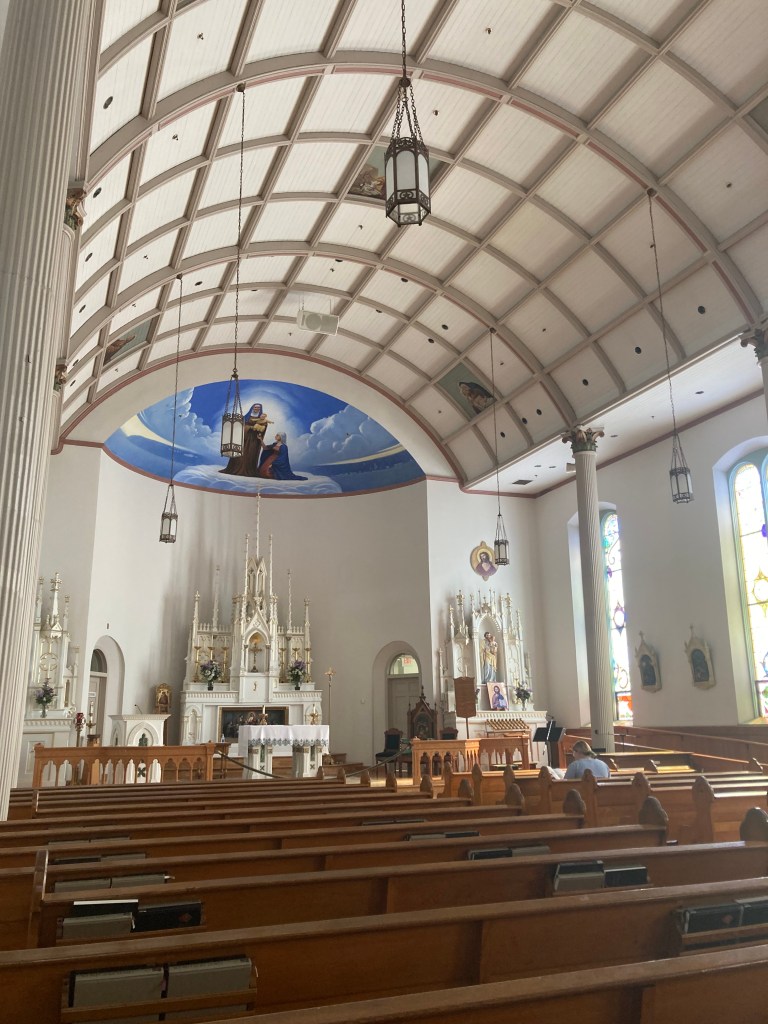
Like most everything else on Mackinac Island, St. Anne is quite captivating.

Outdoor Stations of the Cross.