I spent last week with the family exploring, for the first time, the beguiling Mackinac Island between Michigan’s Upper and Lower peninsulas. But where others were there for the shopping, the bicycling, the fudge, or the horse-drawn carriages, my first inclination was to explore the island’s Catholic roots.
I was not disappointed.
Mackinac, like so many other outposts west of the east, was initially explored by the Jesuits and their Native friends. Specifically, Father Jacques Marquette and Louis Joliet and the Huron Tribe. In fact, Father Marquette’s outsized role in the island’s history is preserved in bronze, just below Fort Mackinac.
A few feet away sits a replica of the Missionary Bark Chapel, where Father Claude Dablon and a member of the Huron tribe met as part of an expedition to determine whether it was suitable for inhabiting and raising crops (the answer was “yes” to the former, “not so much” to the latter).
Finally, my wife and I ambled down the main thoroughfare to the beautiful St. Anne, which preserves the faith’s 300-year-old connection to the island. Sadly, though, we just missed Mass.
When it was over, we boated back to our launching point at St. Ignace, the town’s name serving as first sign of the area’s strong connections to the Society of Jesus.
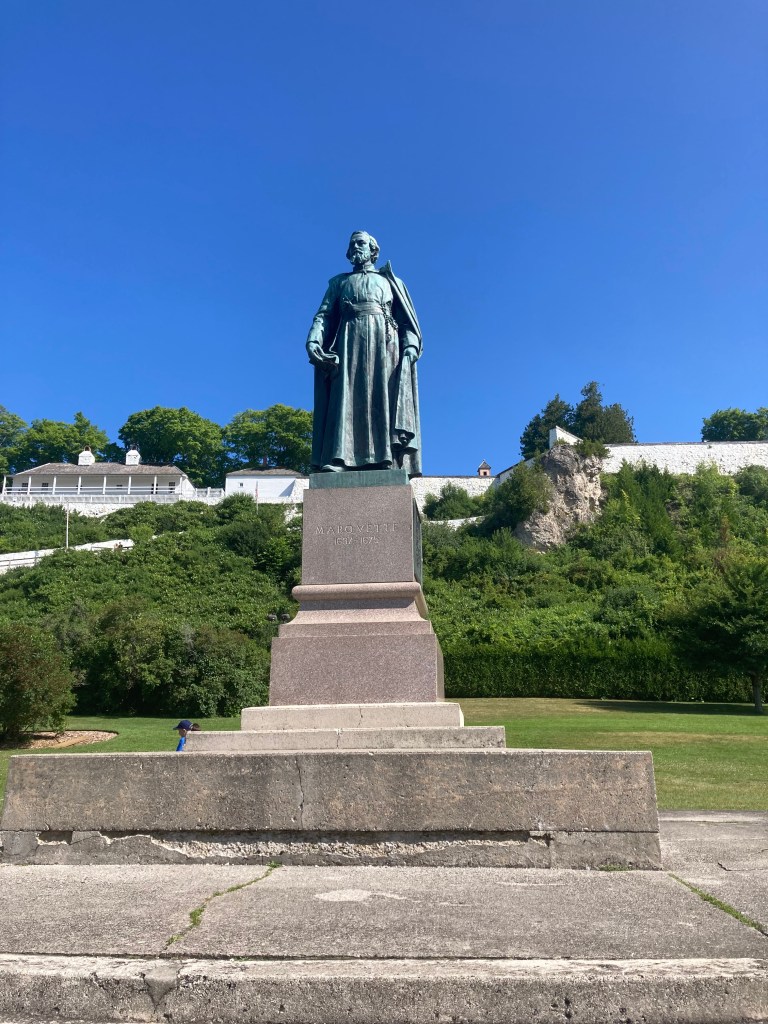
Father Marquette.

The Missionary Baptist Chapel. Inside is a replica of a meeting between Father Marquette and a member of the Huron Tribe.
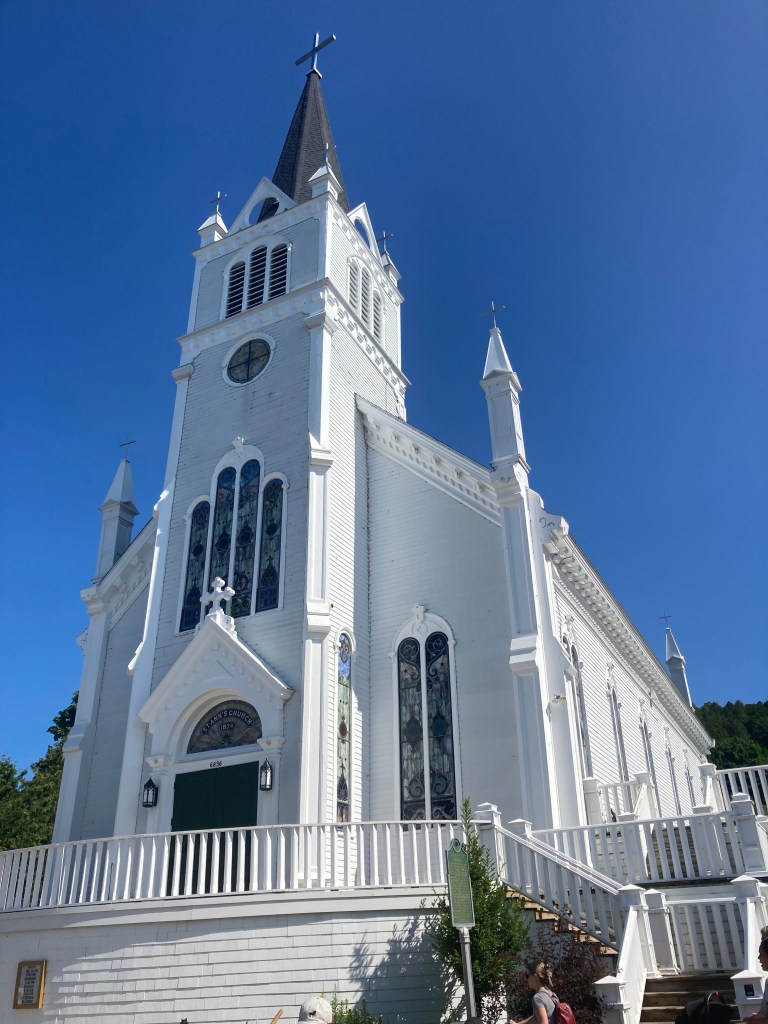
St. Anne, which has a 300-year-old connection to the area.
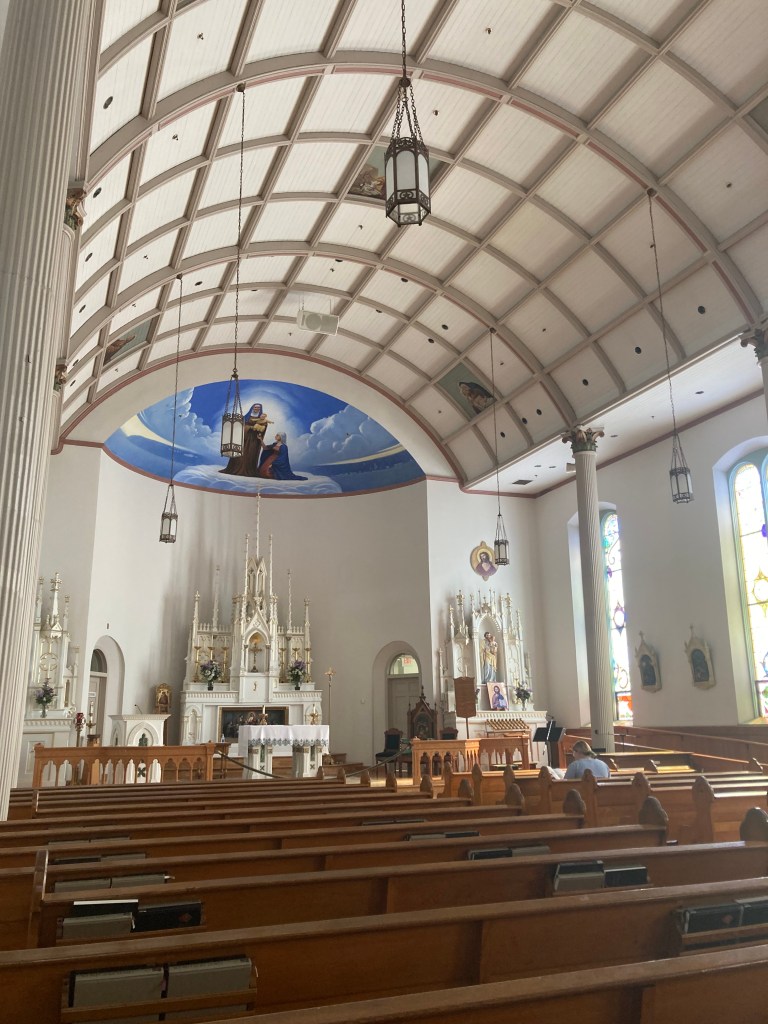
Like most everything else on Mackinac Island, St. Anne is quite captivating.

Outdoor Stations of the Cross.

 52 Masses